Түркі топонимі «Өтүкен» туралы тарихи-географиялық зерттеулер
Views: 440 / PDF downloads: 307
DOI:
https://doi.org/10.32523/tsj.01-2019/2-2Keywords:
Otukan, Otukan Yïš, Orkhon Turkic texts, Khangai MountainAbstract
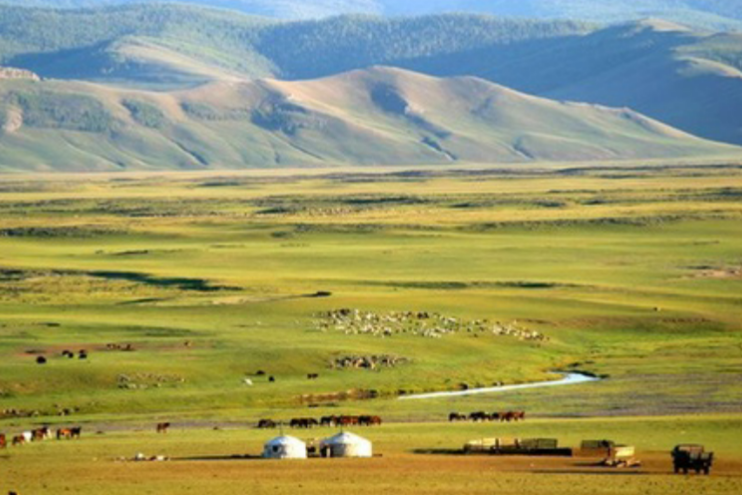
The Otukan Mountain was a Mecca for the Turks serving as both geopolitical and
spiritual center during their brief moment of unification from 552 to 840. Scholars have been
discussing the exact location of the Otukan from 19th century on. We have collected 22 Orkhon
Turkic records mentioning the Otukan. Through comparison, we found they are sufficient enough
to testify a single knowledge that ancient Otukan was the whole Khangai Mountains. There are
also more than eighty Chinese records mentioning the Otukan. Obviously, this important conclusion
will play a significant role in discussing the history and society of the Orkhon Turks as well
as the surrounding area. In fact, three centuries of Turkic period were only a ten percent period
of this three thousand years old great Altaic capital. Khangai particularity its Orkhon Valley had
been at least six times of the Rome for the Hun, Awar, Turk, Uyghur, Khitan and Mongols. Remaining
as is, other than expeditioners photographing some inscription, deer stone, balbal and
sunken walls on the surface, the area has been largely forgotten by us and by archaeologists.
Downloads
Reference
LE COQ, A. von (1912). Türkische Manichaica aus Chotscho I. Berlin (AKPAW. Phil.-hist. Cl. 1911. Anhang: Abhandlungen nicht zur Akademie gehöriger Gelehrter: 6).
LE COQ, A. von (1922). Türkische Manichaica aus Chotscho III. Berlin (AKPAW. Phil.-hist. Cl. 1922. Anhang: Abhandlungen nicht zur Akademie gehöriger Gelehrter: 3).
DANKOFF, R.; J. KELLY (1982). Mahmut el-Kāşгarī: Compendium of the Turkic Di-alects (Dīvān Luγāt at-Türk), Part I, Harvard: Harvard University Press.
DANKOFF, Robert (1983). Wisdom of Royal Glory (Kutadgu Bilig): a Turko-Islamic Mirror for Princes, Chicago and London: University of Chicago Press.
BLAIR, S. (1995). A Compendium of Chronicles: Rashid Al-Din’s Illustrated History of the World, London: The Khalili Collections.
BOYLE, J. A. (1958). History of the World Conqueror by Ala-Ad-Din Ata Malik Ju-vaini, Manchester: University Press
LİU, Yitang (1990). tu hui yan jiu, tai bei: jing shi shu ju.
CZEGLÉDY, K. (1962). “Čoγay-Quzï, Qara-Qum, Kök-Öng”, Acta Orientalia Academ-iae Scientiarum Hungaricae, 15/3: 55-69.
KAMALOV, A. (2003). “The Moghon Shine Usu Inscription as the Earliest Uighur Historical Annals”, Central Asiatic Journal, 47/1: 77-90.
SERTKAYA, O. F.; S. HARCAVBAY (2001). “Hoyto-Tamir (Moğolistan)’dan Yeni Yazıtlar (Ön Neşir)”, Türk Dili Araştırmaları Yıllığı Belleten 2000: 313-346.
AALTO, P. et alii (1958). “Materialien zu den alttürkischen Inschriften der Mongo-lei”, Journal de la Société Finno-Ougrienne, 60/71: 3-91.
AMINEV, Z. G. (2006). “Kul’t Svyatsennoy Drevnix Tyurkov Ötüken i ee Sledı u Başkir”, Problemı Etnogeneza i Etniçeskoy İstorii Başkirskogo Naroda, Materiali Vseros-siyskoy Nauçno-Praktiçeskoy Konferentsii (Ufa, 2006), Gılem, Ufa: 26-29.
AYDEMİR, A. (2010). “Ötüken ve Ötüken Adı Üzerine”, Türk Dünyası Araştırmaları, 187: 197-222.
AYDIN, E. (2007). “Ötüken Adı ve Yeri Üzerine Düşünceler”, Turkish Studies, 2/4: 1262-1269. DOI: https://doi.org/10.7827/TurkishStudies.234
BANG-KAUP, W. (1980). Berlin’deki Macar Enstitüsünden Türkoloji Mektupları (1925-1934), Çev. Ş. TEKİN, Erzurum: Atatürk Üniversitesi Yayınları.
BAO, Wensheng (2010). “Gu Dai Tu Jue Yu Dou Jin Shan Kao”, Meng Gu Shi Yan Jiu, 10: 54-62.
BOSWORTH, C. E. (1995). “Otukan”, Encyclopedia of Islam, Brill, 8: 231a-b.
BUSHAKOV, V. (2007). “Etimologiya ta lokalizatsiya Davn’otyurks’kogo Xoronima Ötüken”, Visnik L’vivs’kogo Universitetu, 42: 192-196.
CEN, Zhongmian (1939). “Wai Meng Yu Dou Jin Shan Kao” (Zhong Yang Yan Jiu Yuan Shi Yu Suo Ji Kan Ba Ben San Fen); Tu Jue Ji Shi, 1958/2: 1085-1088.
CHAVANNES, E. (2006). Batı Türkleri Tarihi, Çev. M. SİRMAN, İstanbul: Töre Yayınları.
CLAUSON, Sir G. (1972). An Etymological Dictionary of Pre-Thirteenth Century Turkish, Oxford: Oxford University Press.
DİNG, Qian (1915). Xin Tang Shu Xue Yan Tuo Chuan Di Li Kao Zheng, Zhe Jiang Tu Shu Guan Cong Shu.
DOERFER, G. (1965). Türkische und Mongolische Elemente im Neupersischen, un-ter besonderer Berücksichtigung alterer Neupersischer Geschichtsquellen, vor ailem der Mangolen- und Timuridenszeit. Band II, Wiesbaden: Franz Steiner Verlag.
DROBYSHEV, Yu. İ. (2012). “Srednevekovıy Ötüken”, Vostok, 4: 5-22.
ERDAL, M. (1991). Old Turkic Word Formation, a functional approach to the lexi-con, Vol. I-II, Wiesbaden: Harrassowitz Verlag.
ESİN, E. (1976). “Ötüken Yış (Türk Sanatında Ağaçlı Dağ Hakkında Notlar)”, Atsız Armağanı, Ed. E. GÜNGÖR et alii, Ötüken Yayınları, İstanbul: 147-186.
FENG, Chengjun; Lu JUNLİNG (1982). Xi Yu Di Ming, Bei Jing: Zhong Hua Shu Ju.
GABAIN, A. von (1950). “Steppe und Stadt im Leben der ältesten Türken”, Der Is-lam, 29: 30 - 62. DOI: https://doi.org/10.1515/islm.1950.29.1.30
GIRAUD, R. (1960). L’Empire des Turcs Célestes. Les règnes d’Elterich, Qapghan et Bilgä (680-734), contribution à l’histoire des Turcs d’Asie centrale, Paris: Libraire d’A-mérique de d’Orient et d’Orient Adrien-Maisonneuve.
GOLDEN, P. B. (2002). Türk Halkları Tarihine Giriş, Çev. O. KARATAY, Çorum: Ka-raM.
GÖMEÇ, S. 2000. “Şine-Usu Yazıtı’nda geçen Yer Adları Üzerine”, Türk Tarih Kurumu Belleten, 240: 427-433. DOI: https://doi.org/10.37879/belleten.2000.427
HAMILTON, J. R. (1997). “Tokuz Uygur ve On Oguz”, Çev. Y. KOÇ; İ. BİRKAN, Türk Dilleri Araştırmaları, 7: 187-232.
HIRTH, F. (1899). Nachworte zur Inschrift des Tonyukuk: die alttürkischen In-schriften der Mongolei, Zweite Folge, St. Pétersburg.
HUANG, Wenbi (1964). “Yi Dou Hu Gao Chang Wang Shi Xun Bei Fu Yuan Bing Xiao Ji”, Wen Wu,2: 35.
Jİ, Yun et alii (1781). “Nan Bei Shi Shi Xiao Lu”, Qin Ding Si Ku Quan Shu,Shi Bu Ba.
JİNG, Fangchang (1890). “Dong Bei Yu Di Shi Lue”, Zhong Guo Dong Bei Di Li Zhi.
JISL, L. (1963). “Kül-Tegin Anıtında 1958’de Yapılan Arkeoloji Araștırmalarının Sonuçları”, Türk Tarih Kurumu Belleten, 107: 387-410.
KAMALOV, A. (2001). “Turks and Uighurs during the Rebellion of An Lu-Shan Shih Ch’ao-yi (755-762)”, Central Asiatic Journal, 45/2: 243-253.
KARATAY, O. (2007). “Ötüken Yıș: Dağ, Orman ve Ülke”, Omeljan Pritsak Ar-mağanı, Ed. M. ALPARGU; Y. ÖZTÜRK, Sarkaya Üniversitesi Basımevi, Sakarya: 131-139.
KATAYAMA, A. (1999). “Tariat Inscription”, Provisional Report of Researches on Historical Sites and Inscriptions in Mongolia from 1996 to 1998, Eds. T. MORIYASU.
A. OCHIR, Osaka University, Osaka: 168-176.
KLYASHTORNY, S. G. (1982). “The Terkhin Inscription”, Acta Orientalia Academ-iae Scientiarum Hungaricae, 36/3: 335-366.
KONOVALOV, P. B. (1999). Etniçeskiye Aspektı İstorii Tsenral’noy Azii (Drevnost’ Srednevekov’ye), Ulan-Ude.
LİN, Enxian (1988). tu jue yan jiu, tai wan: shang wu.
LUO, Xin (2005). “Hui Gu Ya Zhang Cheng Lue Ying”, Wen Shi Zhi Shi.
MARQUART, J. (1914). Über das Volkstum der Komanen, Berlin: Weidmannsche Buchhandlung.
MELİORANSKİY, P. M. (1899). Pamyatnik’ v’ Çest’ Kül’ Tegina, S. Petersburg: Tipo-grafiya İmperatorskoy Akademii Nauk’.
MINORSKY, V. (1948). “Tamīm ibn Baḥr’s Journey to the Uyghurs”, Bulletin of the School of Oriental and African Studies, 12/2: 275-305. DOI: https://doi.org/10.1017/S0041977X00080228
ÖGEL, B. (1957). “Doğu Göktürkleri Hakkında Vesikalar ve Notlar”, Türk Tarih Kurumu Belleten, 81: 81-131.
ÖLMEZ, M. (2012). Moğolistan’daki Eski Türk Yazıtları, Orhon-Uygur Hanlığı Dö-nemi: Metin-Çeviri-Sözlük, Ankara: Bilge-Su Yayıncılık.
ORKUN, H. N. (1936-1941). Eski Türk Yazıtları I-IV, İstanbul: Devlet Basımevi.
PELLIOT P. (1929). “Neuf notes sur des questions d’Asie centrale”, T’oung Pao, Sec-ond Series, 26/5: 201-266. DOI: https://doi.org/10.1163/156853229X00153
POTAPOV, L. P. (1957). “Novıye Dannıye o Drevnetyurkskom”, Sovyetskoye Vos-tokovedeniye, 1: 106-117.
Downloads
Published
How to Cite
Issue
Section
License
Copyright (c) 2021 Turkic Studies Journals

This work is licensed under a Creative Commons Attribution-NonCommercial 4.0 International License.