The Chinese inscription on the Kultegin monument: a historical and source analysis
Views: 492 / PDF downloads: 172
DOI:
https://doi.org/10.32523/2664-5157-2026-2SI-93-115Keywords:
Ancient Turkic Khaganate; ancient Turks; Kultegin monument; Chinese inscription; reconstruction and translation; research; source-critical potential; Bilge Qaghan; Tang dynasty; Emperor Xuanzong of Tang; text interpretationAbstract
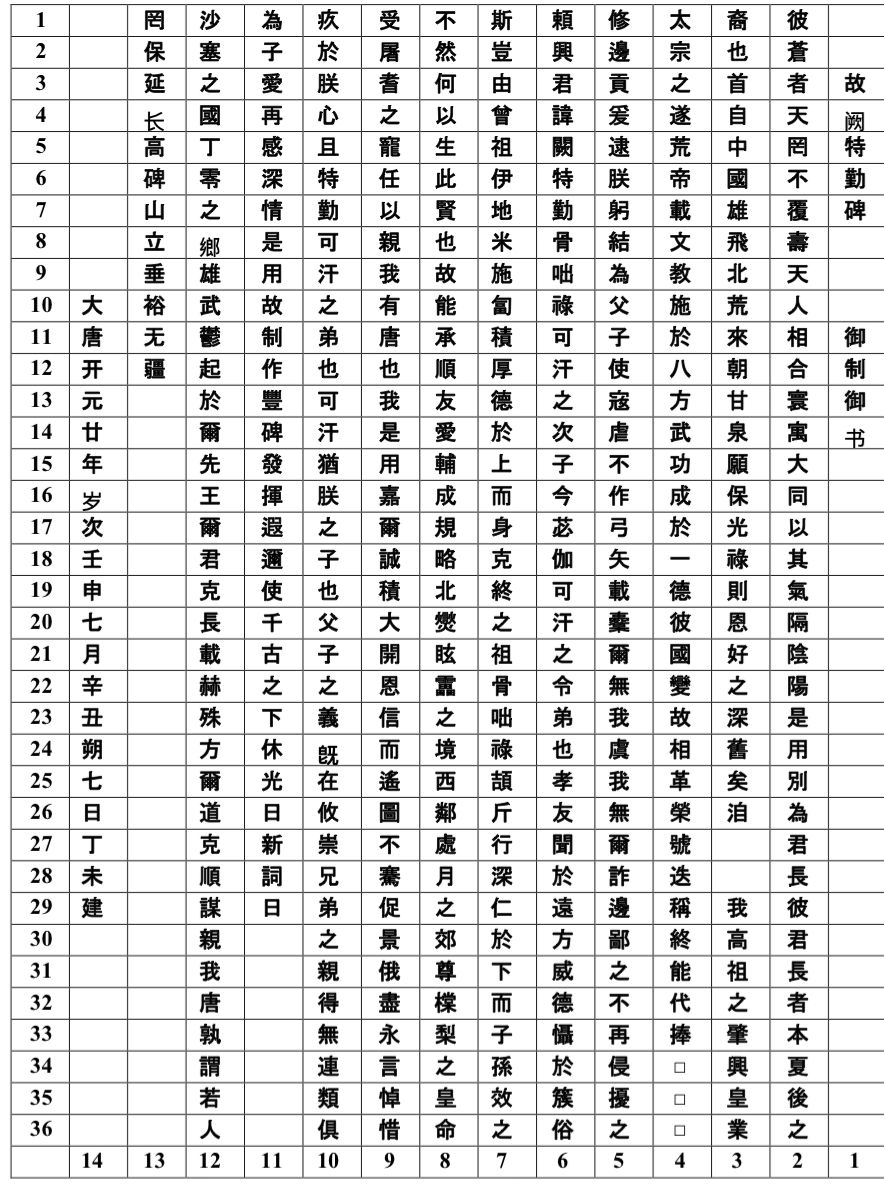
This article examines the Chinese inscription on the Kultegin Monument, one of the most important sources for the history of the ancient Turks and their diplomatic relations with the Chinese Empire during the early medieval period. Erected in 732 CE in honour of Kultegin, the son of Elterish Qutlugh Qaghan, founder of the Second Turkic Khaganate, the monument constitutes a key historical source for the study of the political and cultural history of the Turkic world. Three sides of the stele contain inscriptions in Old Turkic that record the history of the Turkic Khaganates, their relations with neighbouring states, and internal political developments among Turkic tribal confederations. The fourth side bears a Chinese inscription. During the early medieval period, Old Turkic and Chinese functioned as the principal languages of political and diplomatic communication across North and East Asia. Although several translations of the Chinese text have been published, a number of passages remain disputed and insufficiently studied. This article re-examines the Chinese inscription with particular attention to the circumstances surrounding the monument's erection and the representation of political and diplomatic relations between the ancient Turks and neighbouring states. A comprehensive analysis of the text contributes to a more accurate understanding of interstate relations during this period. The study presents a revised reconstruction of the inscription and offers translations of previously damaged or missing passages. Personal names, official titles, toponyms, and historical-philosophical concepts are analysed in light of the latest historical and philological research. Particular emphasis is placed on the role of the ancient Turkic Khaganates in the development of Turkic statehood and on the diplomatic traditions that shaped relations between the Turks and the Chinese Empire. The article also examines elements of Chinese imperial ideology reflected in the inscription, including representations of the emperor's benevolence, strategies of political integration, and the pragmatic use of military and diplomatic power. The Chinese inscription contains valuable information on dates, places, historical figures, and events, making it an important source for verifying and supplementing other historical records. Of particular significance is its confirmation and clarification of information preserved in Old Turkic runic inscriptions, which have traditionally been interpreted primarily through the evidence of Chinese dynastic histories, including the Jiu Tangshu and Xin Tangshu. Comparative analysis of the Chinese inscription, Chinese chronicles, and Old Turkic runic texts demonstrates the close interrelationship of these sources and contributes to a more reliable and comprehensive reconstruction of the history of the ancient Turkic Khaganates and their relations with neighbouring states.
Downloads
Reference
Wang Riwei, 1936. Dīngling mínzú kǎo [A Study of the Dingling Ethnic Group]. Shǐxué jíkān Journal of Historical Studie. No. 10. P. 47-64. [in Chinese].
Vasiliev V.P., 1897. Kitayskiye nadpisi na Orkhonskikh pamyatnikakh v Kosho-Tsaydame i Karbalgasune [Chinese inscriptions on the Orkhon monuments in Kosho-Tsaidam and Karbalgasun]. STOE. Issue 3. St. Petersburg. P. 1-36. [in Russian].
Zakenuly T., 2006. Kultegin eskertkishindegi qytaysha matinnіn zerttelui [Study of the Chinese text on the Kultegin monument]. Kazak tarikhy [Kazakh history]. Almaty. No. 1. P. 12-15. [in Kazakh].
Kaiyrken T.Z., 2022. Kültegin eskertkishi. Tarihi-derektanwlıq taldaw [Kultegin monument. Historical and documentary analysis]. Almaty: Lantar BO0KS. 316 p. [in Kazakh].
Lin Gan, 1987. Gǔ tūjué wén bēimíng zhájì [Notes on Ancient Turkic Inscriptions]. Gǔ Tūjué yǔ Huíhé lìshǐ lùnwén xuǎnjí [Selected Essays on Ancient Turkic and Uyghur History]. Beijing. P. 582-594. [in Chinese].
Matsuda Hisao, 1987. Gǔdài tiānshān lìshǐ dìlǐ xué yánjiū [A Study of the Historical Geography of the Ancient Tianshan Mountains]. Beijing. 377 p. [in Chinese].
Radlov V.V., 1892-1899. Atlas drevnostey Mongolii [Atlas of Mongolian Antiquities]. STOE. T. I-V. St. Petersburg. 538 p. [in Russian].
Sartkozhauly K., 2020. Orhon eskertkishteriniñ tolıq atlası [Complete atlas of Orkhon monuments]. Volume I. Astana. 501 p. [in Kazakh].
Sartkozhauly K., 2003. Orhon muraları [Orkhon Heritage]. І t. Astana. 392 p. [in Kazakh]. Cen Zhongmian, 1937. Bá tūjué wén què tèqín bēi [Postscript to the Kultegin Stele]. Fǔrén xué zhì [Fu Jen Catholic University Journal]. No. 6. Replies 1-2. P. 98-116. [in Chinese].
Xīn Táng shū, Juǎn 215 -1, Zhuán 140 -1, tūjué-1 [New Book of Tang, Volume 215-1. Biographies 140-1. Turks-1]. [in Chinese].
Han Rulin, 1935. Dú Quē tèqín bēi zhájì [Notes on reading the Kultegin Monument]. Guólì Běipíng yán jiù yuàn yuàn wù huìbào [Report of the National Peiping Research Institute. Peiping]. No. 6. P. 65-74. [in Chinese].
Hànshū. Juǎn jiǔshísì. Xiōngnú zhuán [Book of Han, Volume 94, Biography of the Xiongnu]. [in Chinese].
Huang Zhongqin, 1930. Huángzhòngqín. Zài tán Quē tè qín (Kultegin) bēi [A Revisit to the Kultegin Stele]. Zhōngshān dàxué yǔyán lìshǐ xué yánjiū suǒ zhōukān [Weekly of the Institute of Linguistics and History, Sun Yat-sen University]. Sun Yat-sen University. Beijing. 10 vols. No. 120. P. 41-53. [in Chinese].
Huang Zhongqin, 1933. Táng quē tèqín [Kultegin] bēi [The Kultegin Stele]. héběi dì yī bówùyuàn bànyuèkān [Hebei First Museum Semi-Monthly]. Hebei. No. 40. P. 21. [in Chinese].
Cíhǎi, 1979. Shànghǎi císhū chūbǎn shè [Cihai. Shanghai Lexicographical Publishing House]. 2214. [in Chinese].
ZTQQD-Zhongguo tarïhnamalarındağı qazaqqa qatıstı derekter [ZTKKD-Data on Kazakhs in Chinese Historiographies], 2003. Vol. II. Beijing. 997 p. [in Kazakh].
Zhōu shū, Juǎn 27, Zhuán-19 [Book of Zhou, Volume 27, Biographies-19]. [in Chinese].
Chlegel G., 1892. la stele funeraire du Teghin Giogh et ses copistes et traducteurs chinois, russes et allemands. MSFOu. Vol.III. P.1-57.
Gabelentz G.v.d., 1892. The Chinese inscription of the I-r monument, in [Heikel] Inscriptions of the I-r Orkhon. Helsingfors. P. 25-26.
Golden Peter B., 2010. Turks and Khazars: Origins, Institutions, and Interactions in Pre-Mongol Eurasia. Ashgate Variorum. P. 24
Heikel A.O., 1982. Inscription of L̉ Orhon recueillies par l̉ expedition Finnoise 1890 et publiees par la Societe Finno-ougrienne. Helsingfors. 38 p.
Radloff W., 1894. Die altturkischen Inschriften der Mongolei. St. Petersburg. P.167-169.
Thomsen V., 1896. Inscriptions of the Orkhon. Memoirs of the Finno-Ougrienne Societe (MSFOu). V. Helsingfors. 240 p.
Yue Jiazhao, 1934. Hé lín (Harhorim) sān táng bēijì lüè [A Brief Account of the Three Tang Dynasty Steles in Harhorim]. héběi dì yī bówùyuàn bànyuèkān [Hebei First Museum Semi-Monthly]. Hebi. No. P.40-59. [in Chinese].
Downloads
Published
How to Cite
Issue
Section
License
Copyright (c) 2026 Т.З. Қайыркен

This work is licensed under a Creative Commons Attribution-NonCommercial 4.0 International License.