
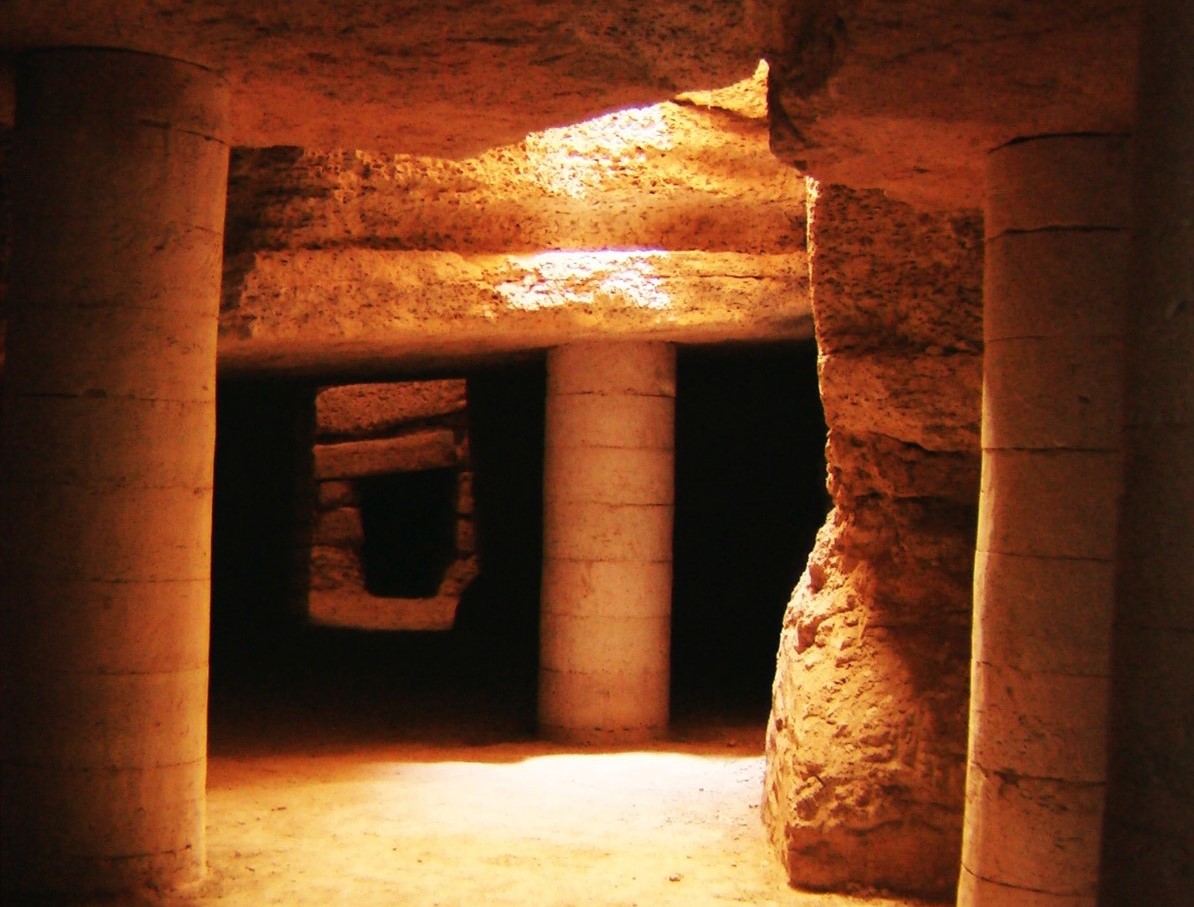
The underground cult structure Sultan-epe on the Tupkaragan peninsula
Views: 456 / PDF downloads: 235
DOI:
https://doi.org/10.32523/2664-5157-2025-4-89-117Keywords:
Turkic sacred architecture, underground mosque, Mangistau, collection of information about the Caucasian highlanders, Hakim Ata, Khoja Ahmed Yasawi, well, Sultan epe, underground rooms, gallery, columnsAbstract
This article examines the archaeological and architectural features of the Sultan-Epe underground mosque, which is located on the Tupkaragan peninsula in the Mangystau region of Kazakhstan. The region's territory is distinguished by a high concentration of historical and architectural monuments, shaped by its unique physical, geographical, and historical conditions. The abundance of rocks suitable for artistic processing played a key role in the development of stone-cutting traditions among the indigenous population of Mangystau. These traditions are marked by both high aesthetic and technological standards. The availability of these materials has led to the widespread use of local stone in construction, significantly reducing the reliance on brick production. Since ancient times, the peninsula's main building material has been limestone-shell rock, which is easily quarried and treatable. Despite its apparent fragility, this material retains its original shape and structural integrity over time. Consequently, many limestone structures have been preserved much better than buildings made of other materials, which have lost their original appearance over the centuries. A distinctive place within the region’s heritage is occupied by its underground architectural monuments, which is represented by religious structures that have been carved into rock formations below the surface. This tradition is believed to have originated in the early Middle Ages. To date, more than twenty such structures are known, characterized by a variety of designs and architectural styles. Among the earliest and most significant examples of this type is the Sultan-yepe underground mosque. This unique structure was created within a shallow channel formed by the erosive activity of floodwaters. The channel cuts through a rock formation approximately 2 metres thick, which is covered by marl clay belonging to the region's Neogene deposits. These geological charecteristics played a desicive role in shaping the architectural configuration of the monument and contributed to its long-term preservation. Archaeological investigations of the site were conducted in 2003 under the supervision of A.E. Astafiev and M.D. Kalmenov. The survey clarified key structural characteristics, identified elements of internal layout, and documented materials related to the long-term functioning of the cult complex. In 2005, restoration work was carried out to maintain its current condition and ensure its continued preservation. The Sultan-epe underground mosque is one of the most significant monuments within the architectural and archaeological heritage of Mangystau. It is distinguished by its exceptional state of preservation and considerable scientific value. Studying it contributes to a deeper understanding of the formation processes of the regional architectural tradition as well as the religious and cultural practices of the ancient communities that inhabited the thу peninsula.
Downloads
Reference
Azhigali S.E., 2002. Arhitektura kochevnikov – fenomen istorii i kul'tury Evrazii [Architecture of the Nomads – A Phenomenon of the History and Culture of Eurasia]. NAN RK, In-t istorii i etnologii im. Ch.Valihanova [National Academy of Sciences of the Republic of Kazakhstan. Ch. Valikhanov Institute of History and Ethnology]. Almaty: Gylym. 2002. 652 p. [in Russian].
Bizhanova A.E., Kalmenov M.D., 2008. Podzemnaya mechet Sultan epe. [The Underground Mosque of Sultan Epe]. Materiali Mezhdunarodnoi nauchno prakticheskoi konferentsii «Problemi izucheniya naslediya I uchenii Khodzhi Akhmeda Yassavi» [In: Proceedings of the International Scientific and Practical Conference “Problems of Studying the Heritage and Teachings of Khoja Ahmed Yasawi]. 29.09-01.10. 2008. g. Turkestan. Almaty. Р. 252–254. [in Russian].
Geptner V.G., 1940. E. A. Eversmann. 1794-1860. Moskovskoe obshchestvo ispytatelej prirody [Moscow Society of Naturalists]. M.: 1940. 80 p. [in Russian].
Esakov V., 1979. Uchyonyj i puteshestvennik [The Scientist and the Traveler.]. Vokrug sveta: zhurnal [Vokrug Sveta (Around the World) journal]. № 1. P. 20–21. [in Russian].
Kalmenov M., Koshbaiuli O., 2009. Mangistaudin zher asti meshіtterі/Podzemnie mecheti Mangistau [Underground mosques of Mangistau]. Almaty. 158 p. [in Russian and Kazakh].
Kalmenov M.D., Bizhanova A.E., 2016. Podzemnaya mechet' Shakpak ata – odna iz naibolee drevnih podzemnyh sooruzhenij Kazahstana [The Underground Mosque of Shakpak Ata – One of the Most Ancient Underground Structures of Kazakhstan.]. Materialy Kongressa Islamskoj Arheologii. Kazan' [In: Proceedings of the Congress of Islamic Archaeology]. P. 145–153. [in Russian].
Kalmenov M.D., Bizhanova A.E., 2025. Shakpak ata zher asty meshіtіnіng merzіmdeluіne bajlanysty masele [On the Issue of Dating the Underground Mosque of Shakpak Ata.]. Materialy mezhdunarodnoj nauchno-prakticheskoj konferencii «Turkі zhurtynyng zhurnagy» [In: Proceedings of the International Scientific and Practical Conference “Legacy of the Turkic World”]. 2-3 kazan 2025. Aktau. P. 32-39. [in Kazakh].
Kekilbaev A., 2003. Ballada zabytyh let [The Ballad of Forgotten Years]. Astana: 2003. 152 p. [in Russian].
Lomakin N.P., 1911. Desyat' let v Zakaspijskom krae [Ten Years in the Trans-Caspian Region]. 1870–1880. Voenno-istoricheskij vestnik [Military-Historical Bulletin]. Kiev. №3–4. P. 66. [in Russian].
Livkin D.I., 1902. Rybolovstvo i tyulenij promysel na vostochnom poberezh'e Kaspijskogo morya: Otchet ego vysokoprevoskhoditel'stvu gospodinu voen. ministru po komandirovke esaula Ural. kazach'ego vojska D. Livkina [Fishing and Seal Hunting on the Eastern Coast of the Caspian Sea: Report to His Excellency, the Minister of War, by Yesaul of the Ural Cossack Army D. Livkin.]. P.-Peterburg: tip. V.F. Kirshbauma. 364 p. [in Russian].
Pervye russkie nauchnye issledovaniya Ustyurta [The First Russian Scientific Studies of Ustyurt], 1963. Sbornik materialov. AN SSSR [Collection of Materials. Academy of Sciences of the USSR]. Otd. geol-geogr. nauk SSSR: Otv. red. Akademik A.L. Yanshin i k.i.n. L.A. Goldenberg [Department of Geological and Geographical Sciences. Eds. Academician A.L. Yanshin and Candidate of Historical Sciences L.A. Goldenberg. Moscow: Publishing House of the Academy of Sciences of the USSR]. M: Izd. AN SSSR. 326 p. [in Russian].
Predanie adaevtsev o svyatih, sekti Hanafie zhivshih i umershih na Mangishlake [The legend of the Adaevites about the saints of the Hanafi sect who lived and died in Mangyshlak], 1873. Sbornik svedenii o kavkazskikh gortsah, izdavaemiy so izvoleniya Ego Imperatorskogo Bisochestva [«Sbornik svedenii o kavkazskih gortsah» Collection of information about the Caucasian highlanders]. Tiflis. Issue 7. P. 6–27 [in Russian].
Savel'ev P.S., 1856. Drevnosti Mangyshlakskogo poluostrova [Antiquities of the Mangyshlak Peninsula]. Trudy Vost. Otd. Arheol.obshch [Proceedings of the Eastern Department of the Archaeological Society]. Sankt-Peterburg: Tipografiya Imperatorskoj Akademii Nauk [St. Petersburg: Printing House of the Imperial Academy of Sciences]. 507 p. [in Russian].
Snesarev G.P., 1969. Relikti domusulmanskih verovanii i obryadov u uzbekov Horezma. [Relics of pre-Islamic beliefs and rituals among the Uzbeks of Khorezm]. Izd. Nauka [Moscow: Nauka Publishers]. Moskva. 336 p. [in Russian].
Stateinii spisok posolstva v Buhariyu dvoryanina Ivana Hohlova, 1620-1622 gg. dekabrya 12 [List of articles of the embassy to Bukhara of the nobleman Ivan Khokhlov, 1620-1622, December 12]. Sbornik knyazya Hilkova [Collection of Prince Khilkov]. Peterburg. 1879. № 107. P. 388–579. [in Russian].
Eshmuradov M. Pir Beket Bekturdi. K voprosu o duhovnom edinstve uzbekskogo i kazahskogo narodov [Pir Beket Bekturdi. On the Question of the Spiritual Unity of the Uzbek and Kazakh Peoples]. URL: https://centrasia.org/newsA.php?st=1165269360#gsc.tab=0 [in Russian]. Accessed: 24.08.2025.).
Downloads
Published
How to Cite
Issue
Section
License
Copyright (c) 2025 Turkic Studies Journal

This work is licensed under a Creative Commons Attribution-NonCommercial 4.0 International License.