Funeral artifacts in the mausoleums of Medieval Syganak remnants of Pre-Islamic traditions in early Muslim Burials
Views: 99 / PDF downloads: 50
DOI:
https://doi.org/10.32523/2664-5157-2026-3-8-32Keywords:
Syganak, medieval settlement, mausoleum, architectural monument, burial rite, facing tiles, excavation, section, necropolis, archaeologyAbstract
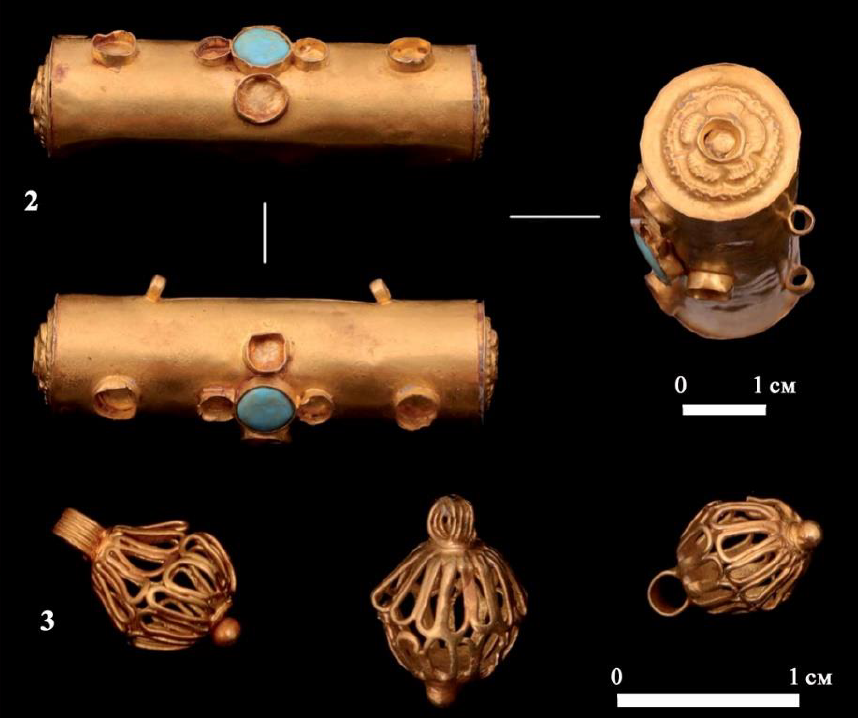
In the first half of the 14th century, Islam was declared the state religion of the Golden Horde, which led to ideological, political, and social changes in society. From that time on, monumental funerary structures, or mausoleums, began to be built over the graves of the elite. This process also took place in the city of Syganak. Mausoleums were built over the graves of local rulers, nobles, and religious figures, creating necropolises. Research on the mausoleums in the medieval city of Syganak began in the second half of the nineteenth century, and comprehensive archaeological investigations have been carried out in recent years. To date, nine mausoleums have been excavated and studied, providing important information about funerary traditions dating to the late thirteenth and early fourteenth centuries. The characteristics of these funerary structures have allowed us to refine their chronology and identify aspects of medieval society's social structure and spiritual worldview. This article analyzes archaeological materials recovered from mausoleums 3 and 7 in the medieval city of Syganak. Eight burials were discovered in mausoleum No. 3, and three were found in mausoleum No. 7. Analysis of the grave goods recovered from these burials indicates that they are relics of pre-Islamic traditions. The use of bronze mirrors, combs, and other grave goods in pre-Islamic burial practices was widespread across a vast territory and not confined to a particular region. Large, rusty nails were found in mausoleum No. 3. The iron nails and staples found in Burials 1, 2, and 4 suggest that they were used to secure the lids of wooden coffins. The jewelry found during the excavations helped refine the mausoleums' dates and provided new evidence about medieval burial customs. A comparative analysis was conducted between the recovered artifacts and analogous finds from neighboring regions. The continuity of burial traditions within these funerary complexes was also examined. The westward orientation of the deceased and the construction of tombs in accordance with Islamic funerary practices indicate the growing influence of Islamic burial rites. Conversely, the inclusion of jewelry and domestic objects as grave goods demonstrates the preservation of elements of the ancient local worldview. The artifacts recovered from the mausoleums attest to the high level of jewelry craftsmanship in the city of Syganak's cultural environment during the thirteenth and fourteenth centuries. Similar artifacts found at the Shoytobe, Kultobe, and Old Turkistan archaeological sites in the Turkistan region support dating these finds to the late thirteenth to early fourteenth centuries.
Downloads
Reference
Abd al-Gaffar Kyrymi, 1343. Umdet at-tavarih [Umdet at-tawarih]. pod red. A. Nedzhiba. Istanbul. P. 21-22. [in Russian].
Aqylbek S., 2019. Kultobe kalazhurtynda zhurgіzіlgen arheologijalyk kazba zhumystarynyn esebі [Report on archaeological excavations conducted in the Kultobe settlement]. Turkіstan. 725 p. [in Kazakh].
Akyshev A.K., Tuyakbaev M.Q., Aytkul H., Oserov T.O., 2011. Ontustіk Kazakstan oblysy, Turkіstan audany, Maydantal auyldyk okrugіne qarasty Taldysu qorymynda zhurgіzіlgen arheologijalyk kazba zhumystarynyn esebі [Report on archaeological excavations conducted at the Taldysu burial ground in the Maidantal rural district of the Turkestan district of the South Kazakhstan region]. Almaty. [in Kazakh].
Azhigali S.E., 2005. Kazak halkynyn dasturlerі men adet-guryptary [Traditions and customs of the Kazakh people]. T. 1. Almaty: Arys baspasy. 328 p. [in Kazakh].
Baypakov K.M., Erofeeva I.V., Kaziev E.S., Ternovaya G.A., 2018. Istoriya religiy v Kazahstane (drevnost' i srednevekov'e) [History of religions in Kazakhstan (ancient and medieval)]. Almaty: Service Press. 553 p. [in Russian].
Baypakov K. M., Smagulov E. A., Ahatov G.A., 2002. Nekropol' Ural'skogo gorodishha [Necropolis of the Ural settlement]. Voprosy istorii i arheologii Zapadnogo Kazahstana: Sbornik nauchnyh statej. Vyp. 1. Ural'sk. [in Russian].
Bahtybaev M.M., Murgabaev S.S., Sizdikov B.S., Arynov Q.S., 2025. Ortagasyrlyq Syganak kalasynyn kesenelerі [Mausoleums of the medieval city of Syganak]. Turkic Studies Journal. T. 7. No 2. P. 26-43. DOI: http://doi.org/10.32523/2664-5157-2025-2-26-43. [in Kazakh]
Bahtybaev M.M., Kozha M.B., Sizdikov B.S., 2026. Gorodishhe Syganak: datirovka pamyatnika po rezul'tatam radiouglerodnogo analiza [Городище Сыганак: датировка памятника по результатам радиоуглеродного анализа]. Otan tarihy. T. 29. No 2. P. 695–712. DOI:10.51943/2788-9718_2026_29_2_695-712 [in Kazakh].
Beysenov A.Z., 2017. Tasmolinskaya kul'tura Saryarki [Tasmolinskaya culture of Saryarka]. Kazahstan v sakskuju jepohu. otv.red. A.Z. Bejsenov. Almaty: Institut arheologii im. A.H.Margulana. P. 59-101. [in Russian].
Vodyasov E.V., Zayceva O.V., 2015. Musul'manskie nekropoli XVII–XIX vv. v okrestnostyah Tomska [Muslim necropolises of the 17th–19th centuries in the vicinity of Tomsk]. Vestnik Tomskogo gosudarstvennogo universiteta. Istoriya. № 1 (33). P. 125–131. [in Russian].
Vasilev D.V., 2007. Islam v Zolotoy Orde (istoriko-arheologicheskoe issledovanie) [Islam in the Golden Horde (historical and archaeological research)]. Astrahan: Astrahanskii universitet. 170 p. [in Russian].
Vagner E.V., 2012. Istoriya izucheniya sarmatskih bronzovyh zerkal [History of the study of Sarmatian bronze mirrors]. Vestnik Volgogradskogo gosudarstvennogo universiteta, №4. P. 168-176. [in Russian].
Izmaylov I.L., 2016. Arheologiya i islam v Srednem Povolzh'e v X – pervoy treti XIII v.: opyt kompleksnogo analiza [Archeology and Islam in the Middle Volga region in the 10th – first third of the 13th centuries: experience of comprehensive analysis]. Povolzhskaja arheologija. № 2 (16). P. 68–92. [in Russian].
Kallaur V.A., 1900. Drevnie goroda Saganak (Sunak), Ashnas ili Yeshnas (Asanas) i drugie v Perovskom uezde, razrushennye Chingis-hanom v 1219 godu [The ancient cities of Saganak (Sunak), Ashnas or Eshnas (Asanas) and others in the Perovsky district, destroyed by Genghis Khan in 1219]. PTKLA (1899-1900), V. Tashkent: Fan. P. 6-16. [in Russian].
Kozybaev M.K. (bas redaktor), 2010. Kazakctan tarixy kone zamannan bugіnge deyіn [History of Kazakhstan from ancient times to the present day]. Almaty: Atamura baspasy. Tom 1. 768 p. [in Kazakh].
Lubo-Lesnichenko E.I., 1975. Privoznye zerkala Minusinskoy kotloviny [Imported mirrors of the Minusinsk Basin]. Moscow: Nauka. 170 p. [in Russian].
Mahmut Kashkari, 1997. Turіk tіlіnіn sozdіgі (Diani lugat-it-turіk) [Dictionary of the Turkish language (Diani Dictionary-Turkish)]. 3 tomdyq shygarmalar zhinagy. І tom. Almaty: Hant, 531 p. [in Kazakh].
Maryksin D.V. 2009. Mogil'nik epohi Zolotoy Ordy Mokrinskiy І (po materialam rabot 2008 goda) [The Mokrinsky I burial ground of the Golden Horde era (based on materials from 2008)]. Voprosy istorii i arheologii Zapadnogo Kazahstana. Nauchny zhurnal, № 1. Ural'sk. P. 246–272. [in Russian].
Murgabaev S.S., Sizdikov B.S., 2026. Karatau zhotasy Karakoz (Shimayly) qorymyndagy arheologiyalyk zertteu zhumystarynyn natizhelerі [Results of archaeological research at the Karakoz (Shimayli) burial ground, Karatau Range]. QazUU Habarshysy. Tarih seriyasy. 121 №2. P. 116-130. https://doi.org/10.26577/JH2121202610 [in Kazakh].
Onggar A. (red)., 2016. Gasyrlar altyny. Ulttyu muzeydіn altyn zhane kumіs buymdarynyn toptamasy [Gold of the Ages. Collection of Gold and Silver Products of the National Museum]. qurastyrgan. B. Hasenova, Sh.Muqataeva. Astana: Regis ST Ploigraf. 368 p. [in Kazakh]. Polyakova G.F., 1996. Izdeliya iz cvetnyh i dragocennyh metallov [Products made of non-ferrous and precious metals]. Gorod Bolgar. Remeslo metallurgov, kuznecov, liteyshhikov. Otv. red. G.A.Fedorov-Davydov. Kazan': IYaLI im. G. Ibragimova AN Tatarstana. P. 154-268. [in Russian].
Smagulov E., 2017. Drevniy Turkestan: shtrihi k istoricheskomu portretu [Ancient Turkestan: Touches on a Historical Portrait]. Almaty: Hikari. 343 p. [in Russian].
Hazanov V.M., 1964. Religiozno-magicheskoe ponimanie zerkal u sarmatov [The Sarmatians' religious and magical understanding of mirrors]. Sovetskaya arheologiya, №3. P. 89-96. [in Russian].
Utemish-hadzhi, 1992. Chingiz-name [Chingiz-name]. Alma-Ata. Gylym. P. 246. [in Russian].
Yakubovski A.Ju., 1929. Razvaliny Sygnaka (Sugnaka) [Ruins of Sygnak (Sugnak)]. Soobshheniya GAIMK. T.11. Leningrat. P. 123-159. [in Russian].
Downloads
Published
How to Cite
Issue
Section
License
Copyright (c) 2026 Мэлс Бахтыбаев , Сагынбай Мургабаев, Музаффер Гурсой, Багдаулет Сиздиков

This work is licensed under a Creative Commons Attribution-NonCommercial 4.0 International License.