The Karsakpay epigraphic monument on Altynshoky Hill in the Landscape of Tamerlane’s 1391 Military Campaign
Views: 341 / PDF downloads: 186
DOI:
https://doi.org/10.32523/2664-5157-2026-2SI-198-228Keywords:
Tamerlane, Tokhtamysh, Altynshoky, Ulytau, Karsakpay inscription, epigraphy, Old Uyghur script, Chagatai language, lieux de mémoire, conflict landscape, historical memory, Timurid political cultureAbstract
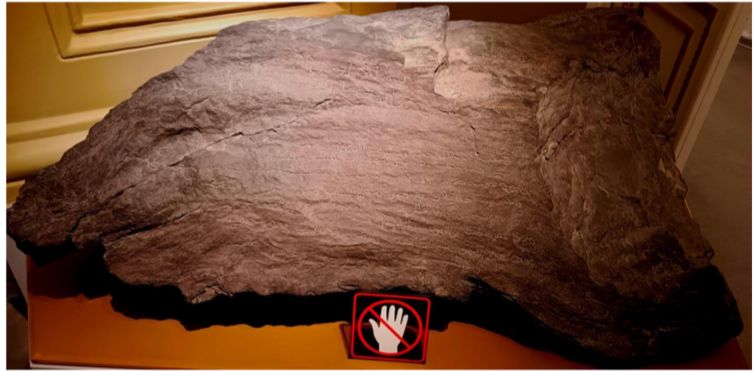
This study offers a comprehensive interdisciplinary analysis of the cultural-historical complex on Altynshoky Hill (Ulytau, Kazakhstan), established in connection with Tamerlan’s military campaign against Tokhtamysh, Khan of the Golden Horde, in 1391. We conceptualize the landscape of this military conflict as a distinct historical and cultural space, in which material objects acquire sacred and commemorative significance. The study focuses on the epigraphic monument known as “Timur’s Stone” (also referred to as the Karasakpay inscription by its first translator, Nicholas N. Poppe, in 1940), as well as the kurgan-oboo, interpreting them as interconnected elements of a unified complex that constitutes a “place of memory.” Using methodology of lieu de mémoire, which identifies historical events symbolically embedded in material environment, we integrated archaeological, historical, and textual evidence into a unified analytical framework. The epigraphic monument reflects the continuity of Turkic written traditions within the political culture of Timurid' era. It uses the Uyghur script to record a text in the Chagatai language upkeeping earlier Turkic writing practices in the official commemorative address of the late fourteenth century. The mixture of Arabic formulaic expressions with a Turkic text illustrates the synthesis of Islamic political ideology and Turkic state-administrative traditions. The bilingual character of the inscription along with its composition suggest the prominence of this inscription in political legitimation, linking sacred Islamic discourse with established forms of steppe political culture. It constitutes as important relic of cultural and ideological policies under the Timurid dynasty. The horizontal orientation of the text is also a notable epigraphic feature. It reflects the adaptation of the Uyghur script to the demands of monumental inscription and to the physical layout of the stone slab, indicating a transformation of graphic conventions within the broader context of material culture and regional practices of written record-keeping. It shows flexibility of writing norms when transferred from manuscript to epigraphic context and highlights the influence of technical and spatial constraints on the visual organization of the text. The inscription functioned as a politico-memorial marker, recording Tamerlane’s campaign against Tokhtamysh in 1391. In this role, the epigraphic monument serves as a material instrument for constructing historical memory and symbolically representing power in medieval Turkic political culture. Alongside the kurgan, interpreted as a ritual and thermotechnical structure, the Altynshoky complex is considered a unique example of sacralizing the space of military conflict, combining elements of Turkic-Mongol tradition, Islamic ideology, and local natural-cultural practices of steppe landscape. This study offers a new perspective on the role of material objects in shaping historical memory and political symbolism.
Downloads
Reference
Akhmedov B.A., Mukminova R.G., Pugachenkova G.A., 1999. Amir Temur. Zhizn' i obshchestvenno-politicheskaya deyatel'nost'. [Amir Temur. Life and socio-political activities]. Tashkent: Universitet. 263 p. [in Russian].
Bartol'd V.V., 1963. Sochineniya. Obshchiye raboty po istorii Sredney Azii [Works. General works on the history of Central Asia]. V. II. P. 1. M.: Izd-vo Vost. lit-ry. 1024 p. [in Russian].
Bartol'd V.V., 1992. Tsarstvovaniye Timura. Tamerlan: Epokha. Lichnost'. Deyaniya. [he Reign of Timur. Tamerlane: Era. Personality. Deeds]. ed. R. Rakhmanaliyev Izd-vo «Gurash». P. 412–459 [in Russian]. Р. 472-489 [in Russian].
Bobrov L.A., 2015. Komandnyy sostav armii Amira Timura v Kondurchinskoy bitve 1391 g. [Command staff of Amir Timur’s army in the Battle of Kondurchin in 1391]. Zolotaya Orda: istoriya i kul'turnoye naslediye: sbornik nauchnykh materialov [Golden Horde: history and cultural heritage: collection of scientific materials]. Otv. red. A.K. Kushkumbayev. Astana: IP «BG-PRINT». P. 111–135. [in Russian].
Grigor'yev A.P., Telitsin N.N., Frolova O.B., 2004а. Nadpis' Timura 1391 g. [Timur’s Inscription of 1391]. Istoriografiya i istochnikovedeniye istorii stran Azii i Afriki. [Historiography and source studies of the history of Asian and African countries]. Issue XXI. St. Petersburg: P. 3–24. [in Russian].
Grigor'yev A.P., Telitsin N.N., Frolova O.B., 2011в. Nadpis' Timura 1391 g. [Timur’s Inscription of 1391]. Tyurkskiye narody Yevrazii v drevnosti i srednevekov'ye. red. kol. S.G. Klyashtornyy (pred.). T.I. Sultanov, V.V. Trepavlov [Turkic peoples of Eurasia in ancient times and the Middle Ages. ed. S.G. Klyashtorny (chairman). T.I. Sultanov, V.V. Trepavlov]. M.: Izdatel'skaya firma «Vostochnaya literatura» RAN. Р. 109-129 [in Russian].
Ivanin M. I., 1992. Sostoyaniye voyennogo iskusstva u sredneaziatskikh narodov pri Timarlane. Tamerlan: Epokha. Lichnost'. Deyaniya. [The State of Military Art among the Central Asian Peoples under Timur]. ed. R. Rakhmanaliyev Izd-vo «Gurash». P. 412–459 [in Russian].
Zhukovskaya N.L., 1988. Kategorii i simvolika traditsionnoy kul'tury mongolov. [Categories and symbolism of traditional culture of the Mongols.]. M.: Izd-vo «Nauka». 198 p. [in Russian].
Znak Timura na sopke Altynshoky: sb. st. i publikatsiy [Timur's sign on Altynshoky hill: collection of articles and publications]. Gl. red. Usmanova E.R. Karaganda: LtdTengri. 192 p. [in Russian].
Kitaba – epigraficheskiye nadpisi islamskogo mira. Islamosfera [ Kitaba – epigraphic inscriptions of the Islamic world. Islamosphere] [Electronic resource] https://islamosfera.ru/kitaba-epigraficheskie-nadpisi-islamskogo-mira. (Accessed at: 15.03..2026) [in Russian].
Kostyukov V.P., 2009. Neskol'ko zamechaniy k pokhodu Timura 1391 g. [Several remarks on Timur’s campaign of 1391]. Voprosy istorii i arkheologii Zapadnogo Kazakhstana [Questions of history and archeology of Western Kazakhstan]. № 2 (Iss. 11). P.120–138. [in Russian].
Kramarovskiy M.G., 2005. «Kamen' Timura» kak fenomen chingisidskoy istorii i kul'tury [“Timur’s Stone” as a Phenomenon of Chinggisid History and Culture]. Zolotaya Orda. Istoriya i kul'tura: katalog vystavki k 1000-letiyu Kazani [Golden Horde. History and Culture: Catalogue of the Exhibition for the 1000th Anniversary of Kazan]. SPb.: Slaviya. P. 167–170. [in Russian].
Lopatkin I. N., 2023. Rekonstruktsiya Yuzhno-Ural'skogo etapa karatel'nogo pokhoda voysk Tamerlana na Zolotuyu Ordu 1391 goda [Reconstruction of the South Ural stage of the punitive campaign of Tamerlane's troops against the Golden Horde in 1391]. Izvestiya Yugo-Zapadnogo gosudarstvennogo universiteta. Seriya: Istoriya i parvo [Bulletin of the South-West State University. Series: History and Law]. V. 13. № 4. P. 163–177. [in Russian].
Mirgaleyev I.M., 2007. Materialy po istorii voyn Zolotoy Ordy s imperiyey Timura [Materials on the history of the wars of the Golden Horde with the empire of Timur]. Kazan': Institut istorii AN RT. 108 p. [in Russian].
Mirgaleyev I.M., 2011. Bitvy Toktamysh-khana s Aksak Timurom. Voyennoye delo Zolotoy Ordy: problemy i perspektivy izucheniya [Battles of Tokhtamysh Khan with Aksak Timur. Military affairs of the Golden Horde: problems and prospects of study]. Otv. red. i sostavitel' I.M. Mirgaleyev. Kazan': Institut istorii im. Sh. Mardzhani AN RT. P. 170–182. [in Russian].
Mirgaleyev I.M., 2009. Nadpis' Aksak Timura: neskol'ko zamechaniy po prochteniyu [The inscription of Aksak Timur: several comments on reading]. Zolotoordynskaya tsivilizatsiya [Golden Horde civilization]. Issue 2. Kazan': Izdatel'stvo «Fen» AN RT., P. 121–127. [in Russian].
Nora P., Ozuf M., ZH. de Pyuimezh, Vinok M., 1999. Frantsiya-pamyat' [France-memory]. Trans. from fr.: Dina Khapayeva. SPb.: Izd-vo S.-Peterb. un-ta. P. 17-50. [in Russian].
Panyushkina I., Usmanova E., Uskenbay K., Kozha M., Dzhumabekov D., Akhatov G., & Jull A., 2022. Chronology of The Golden Horde in Kazakhstan: 14C dating of Jochi Khan mausoleum. Radiocarbon. 64 (2). Р. 323-331.
Ponomarev A.I., 1945. Popravki k chteniyu «nadpisi Timura» [Corrections to the reading of the “Timur inscription”]. Sovetskoye vostokovedeniye [Soviet Oriental Studies]. M.: L. V. 3. P. 222–224. [in Russian].
Poppe N.N., 1940. Karasakpayskaya nadpis' Timura [The Karasakpai inscription of Timur]. Trudy otdela Vostoka Gosudarstvennogo Ermitazha [Transactions of the Oriental Department of the State Hermitage Museum]. L., V. 2. P. 185–187. [in Russian].
Ru Zhan-Pol', 2007. Tamerlan [Tamerlane]. M.: Izd-vo «Molodaya gvardiya». 286 p. [in Russian].
Sarsekeyev M., 1980. Satpayev. Zhizn' zamechatel'nykh lyudey [Satpayev. Life of Remarkable People]. M. 319 p. [in Russian].
Sembi M., 2014. Ulytau. Kratkiy entsiklopedicheskiy slovar' istoricheskikh toponimov Kazakhstana [Brief encyclopedic dictionary of historical toponyms of Kazakhstan]. Comp. I.V. Yerofeyeva. Almaty: KazNIIK. P. 427–431. [in Russian].
Snesarev G.P., 1969. Relikty domusul'manskikh verovaniy i obryadov u uzbekov Khorezma [Relics of pre-Muslim beliefs and rituals among the Uzbeks of Khorezm]. M.: Izd-vo «Nauka». 336 p. [in Russian].
Tizengauzen V.G., 1941. Sbornik materialov, otnosyashchikhsya k istorii Zolotoy Ordy [Collection of materials related to the history of the Golden Horde.]. T. II. Izvlecheniya iz persidskikh sochineniy sobrannyye V.G. Tizengauzenom i obrabotannyye A.A. Romaskevichem i S.L. Volinym [Extracts from Persian works collected by V.G. Tiesenhausen and processed by A.A. Romaskevich and S.L. Volin]. M.-L.: Izd-vo AN SSSR. 307 p. [in Russian].
Usmanova E.R., Panyushkina I.P., 2023. Landshafty voyennogo konflikta Zolotoy Ordy v Ulytau: kompleksy Karasuyr i Altynshoky [Landscapes of the Golden Horde military conflict in Ulytau: the Karasuyr and Altynshoky complexes]. Drevniye i srednevekovyye gosudarstva i soyuzy nomadov Yevrazii v kontekste novykh arkheologicheskikh i pis'mennykh istochnikov: materialy Mezhdunarodnoy nauchno-prakticheskoy konferentsii, posvyashchennoy 70-letiyu arkheologa, d.i.n., professora A.N. Podushkina [Ancient and medieval states and unions of nomads of Eurasia in the context of new archaeological and written sources: Proceedings of the International scientific and practical conference dedicated to the 70th anniversary of the archaeologist, Doctor of Historical Sciences, Professor A.N. Podushkin] (g. Shymkent, 17–18 marta 2023 g.). Almaty: Institut arkheologii imeni A.KH. Margulana. P. 130-139 [in Russian].
Usmanova E.R., Zhumashev R.M., Kozhakhmetov B.S. Tleubergenov T.A. 2025. Znaniye i sokhraneniye pamyati o «kypchakskom» pokhode Amira Timura 1391 goda [Knowledge and Preservation of the Memory of Amir Timur's Campaign Against the Kipchaks in 139]. Povolzhskaya arkheologiya. № 2 (52). P.143–154 [in Russian].
Usmanova E.R., Zakharov S.V., Panyushkina I.P., 2025. Prirodno-istoričeskie lokusy Ulusa Džuči v Ulytau [Natural History Loci Ulus Juchi in Ulytau]. Golden horde legacy: Materials of the VIII International Golden Horde Forum “Pax Tatarica: Medieval Sources and Historical Context”. Bolgar-Kazan. June 9–11. Issue 6. Kazan. P. 293-306 [in Russian].
Fedchenko O.D., 2022. Pokhod Tamerlana na Desht-i Kipchak v 1391 godu [ Tamerlane's campaign against Desht-i Kipchak in 1391]. Tyurkologicheskiye issledovaniya [Turkic studies]. V. 5. № 4. P. 44–55. [in Russian].
Fomin V.N., Usmanova E.R., Zhumashev R.M., Pokussayev A.V., Motuza G., Omarov Kh.B., Kim Yu. Yu, Ishmuratova M.Yu., 2008. Chemical-technological analysis of slags from the Altynshoky complex. Bulletin of the University of Karaganda-Chemistry. Р. 64–74. [in English].
Eliade Mircha, 1987. Kosmos i istoriya [Space and history]. M.: Progress. 312 p. [in Russian].
Ure J., 1980. The trail of Tamerlane. London: Constable. 206 p. [in English].
Yakubovsky A.Yu., 1946. Timur [Timur]. Voprosy istorii [Questions of history]. No. 8-9. P. 42-74 [in Russian].
Downloads
Published
How to Cite
Issue
Section
License
Copyright (c) 2026 Э.Р. Усманова, Р.М. Жумашев, Г.Т. Едгина, И.П. Панюшкина

This work is licensed under a Creative Commons Attribution-NonCommercial 4.0 International License.